Music to Share With Every Immigrant Today
This week, we welcome Healing Bells team member María Arce, journalist, immigration doula, and beautiful person, to share a recent Substack post she created that mentions Healing Bells. María shows us how–even while suffering deep oppressions–we can claim agency, foster loving relationships, and connect with our humanity through simple and profound acts of kindness.
The arts create a safe internal space where the nervous system can de-escalate, allowing individuals to process complex trauma.
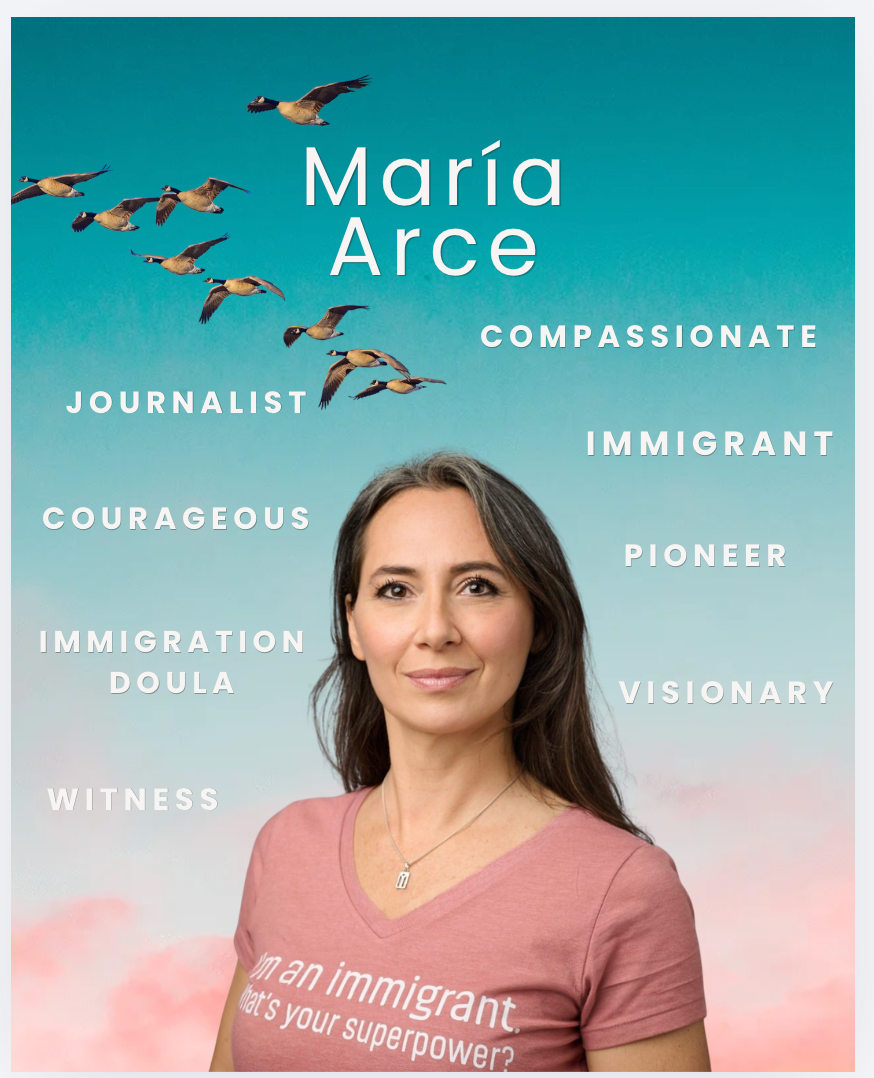
If you have read the About section of this Substack, you know I love music. I am the daughter of a wonderful pianist and former contralto who sang at the Colón Theater, considered one of the best opera houses in the world, together with La Scala in Milán, the Opéra Garnier in Paris, and the Royal Opera House in London. I grew up surrounded by instruments, with a grand piano and musicians rehearsing in the back of our living room. That is why you will see certain sentences across my publication accompanied by music emojis (🎵)—they indicate that I am sharing not just an idea, but a song for you. I strongly believe in the healing.
The Healing Power of Art and Sound

Music has a unique, visceral capacity to hold what words cannot. In times of profound transition, anticipatory grief, or displacement, listening to music acts as a psychological sanctuary. It creates a safe internal space where the nervous system can de-escalate, allowing individuals to process complex trauma.
This profound quality extends directly into clinical and transitional care. In end-of-life care, music is routinely used to reduce pain, ease anxiety, and provide a familiar bridge for patients crossing their final threshold. Similarly, for immigrants and those navigating the agonizing fracture of family separation, music functions as an emotional anchor. It provides a portable home—a safe space to grieve, find solace, and reclaim a sense of dignity when everything else feels unstable.
One project that opened my eyes to this truth was Healing Bells, a nonprofit organization rooted in the healing arts. Created in March 2020 by journalist Jet Schouten and composer Pamela Ruiter-Feenstra as the pandemic shut down the University of Michigan, it built a space to co-create music, theatre, dance, and poetry. Pamela designed this work specifically to spotlight cultural wisdom, tell censored stories, and create “space for voices that have been silenced, grief that needs holding, and hope that longs to be heard.” I know its power firsthand because I participated in one of its productions: “Ni Une Más.”
Finding Sanctuary in Peacelands
Many artists have recently expressed support for immigrants. But lately, I discovered an album I think every immigrant—and every American and every person in the world—should listen to, no matter where they live. It’s called Peacelands by My Morning Jacket, the legendary band formed in Louisville, Kentucky, in 1998.
Released in early 2026, the 14-song collection of acoustic covers and originals consists entirely of “peaceful protest songs,” with all proceeds benefiting “organizations working for fairness, equality, peace, love, and justice.”
In an interview with The Current’s host Zach McCormick, frontman Jim James explained that he had been searching for a way to be “a force of peace and love” and de-escalate hatred and violence against immigrants. As a man of the arts, his answer was right in front of him. He gathered his favorite songs, hoping they would provide a very real sense of calm, healing, and peace to anyone who listens, immigrant or not.
The resulting album is a masterclass in compassion and acceptance. Across its tracks—which include MMJ favorites like “I’m Amazed,” “State of the Art,” and “Here in Spirit,” alongside covers of Bob Dylan (“Blowin’ in the Wind”), Brian Wilson (“Love and Mercy”), The Velvet Underground (“I Found a Reason”), and Timmy Thomas (“Why Can’t We Live Together”)—the album shares a cohesive message on collective resilience, profound empathy, and the refusal to let hatred win. The whole album is an urgent reminder that our shared humanity transcends the political borders that seek to divide us.
The title Peacelands is inspired by Louisville artist Mark Anthony Mulligan, whose artwork envisioned an imaginary land of peace, friendship, and equality. A place where people listen to one another despite their differences. As James noted in the press release of their latest album:
“We believe that it’s still possible for us to achieve Mark’s vision of Peacelands... if only we can learn to listen, love, and forgive in paths of peace, acceptance, and tolerance.”
Whether you are an immigrant, an American, or a global citizen, I invite you to listen to the album and spread the word. By doing so, you’ll be building bridges instead of walls.
Because as one of the songs reminds us:
“Love and mercy, that’s what you need tonight. So, love and mercy to you and your friends tonight.”

What else can you do?
Donate: Support organizations like UNHCR (the UN Refugee Agency) to protect and assist families forced to flee, or American Families United, a network fighting for families impacted by historic immigration policies separating U.S. citizens from their spouses.
Advocate for immigrants and refugees: Engage with your networks, community leaders, and elected officials. Cultivate a culture of acceptance that breaks down harmful misconceptions.
Help where you are: Offer practical support, food, or shelter to newcomers, and back immigrant- and refugee-run businesses.
Give your time: Volunteer with local organizations supporting transition and integration.
Subscribe to this Substack: Share my work with others experiencing family separation due to broken immigration systems. Leave your comments and questions below, and I’ll do my best to answer them.
Thanks for reading! Subscribe for free to receive new posts and support my
Disclaimer: The information shared in this article is provided for educational and informational purposes only. The author is a doula, not a licensed medical doctor, psychologist, or psychiatrist. This content does not constitute medical or mental health advice and is not a substitute for professional diagnosis or treatment. If you are experiencing significant emotional distress, mental health challenges, or believe you need support, please contact a licensed healthcare professional or therapist.


Comments