Landscapes of Crisis in Venezuela
Emerging from the collaboration between the composer Pamela Ruiter-Feenstra and the investigative journalist Marielba Núñez Aranguren, Landscapes of Crises in Venezuela is an effort to portray the complexity of the Venezuelan humanitarian crisis, which has left deep scars throughout this Latin American country in the last decade.
Landscapes of Crises in Venezuela is a triptych formed by "La boca del dragón" (The mouth of the dragon), based on a documentary poem by Marielba Núñez, which portrays shipwrecks and disappearances in the Caribbean Sea linked to human trafficking on the border between Venezuela and Trinidad and Tobago; "Caminantes" (Walkers), inspired by the story of millions of migrants who fled Venezuela on foot, mainly across the borders with Colombia; and "Llanto de Tepuyes" (Tears of the Tepuyes), that denounces the devastation that occurs in the forests south of the Orinoco, which deepened after the launch of the Venezuelan state project known as Arco Minero.
Landscapes of Crises in Venezuela is a powerful multimedia performance that merges music, text, and film to expose the humanitarian and environmental emergencies caused by Venezuela’s authoritarian regime. Under a government that silences the press and erases dissent, millions of people suffer from censorship, displacement, and violence.
Through this new narrative form developed by Healing Bells, stories once hidden and ignored are revealed, making them impossible to unsee or forget. From environmental devastation to human trafficking and mass forced migration, this production stands as a call for global awareness and human rights interventions.
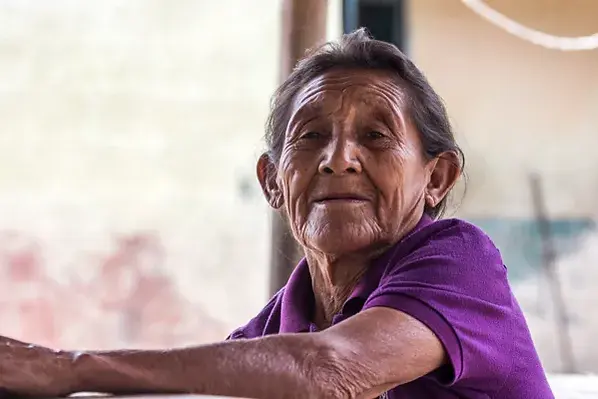
Tepuyes’ Tears: when nature & people are silenced
In Llanto de Tepuyes (Tepuyes’ Tears), the performance centers on the Canaima region, once a UNESCO-protected natural wonder. The Tepuyes, flat-topped sacred mountains, weep as government-backed gold mining ravages the land. Waterfalls once cascading freely now echo with loss, and the rich biodiversity that defines the region is under threat.
Through sound, we hear the Pemón children singing, the jaguars pacing, and insects buzzing among fluttering leaves—a lush soundscape that slowly gives way to the metallic trills of excavation machinery, choking the life from the land.
The Pemón people, who have lived in harmony with this land for thousands of years, now face displacement, forced labor, and cultural erasure.
This piece, along with "La Boca del Dragón" and "Caminantes", reveals the layered tragedies unfolding in Venezuela, each note demanding attention, and each story resisting silence.
Photos: Yaikel Dorta


La boca del dragón (The mouth of the dragon)
Immersed in a humanitarian crisis, Venezuela is experiencing a forced migration: millions of people are looking for a chance to escape from a country where the access to food and medicine is more difficult each day. One of the routes of this migration is the small strait that separates the population of Güiria in eastern Venezuela by sea from the neighboring island of Trinidad. People cross this way in simple and small boats known as peñeros. Although it is a very brief journey, it is necessary to navigate across a channel of turbulent waters. Already in the 15th century, this channel crossing was so dangerous for sailors that it was christened by colonizer Christopher Columbus as “La Boca del Dragón” (“The Mouth of the Dragon”).
In April and May of 2019, two peñeros with tens of migrants from Venezuela were shipwrecked on that trip to Trinidad. A total of 60 people disappeared, mostly adolescent women, and it is feared that they have been victims of human trafficking. Mystery surrounds the story like a shroud. Survivors of one of the shipwrecks said that one of these peñeros sank in la Boca de Dragón. The piece “La Boca del Dragón” recreates the tragic story to try to keep alive the memory of these migrants of uncertain destiny who faced unimaginable dangers in search of hope.
The depth and extension of the Venezuelan humanitarian crisis, as well as the systematic censorship and persecution of freedom of expression practiced by the authoritarian government of Venezuela, formed the basis of the journalist and writer Marielba Núñez's search for new ways to narrate what is happening in her country. She was drawn to two cross-disciplinary arts: Documentary Poetry, in which stories are reported through poetry, and Healing Bells, where underreported stories of social injustices and agency are reported via music and film. The ensemble version of “La Boca del Dragón” is the first piece to combine both art forms. In the organ version, the music paints the story of turbulent waters, a frantic escape, and bells that sound 60 times to remember the 60 missing passengers.
“Dormite mi niño”
Dormite mi niño
que estás en la cuna
que no hay mazamorra
ni leche ninguna.
Dormite mi niño
que estás en la hamaca
que no hay mazamorra
ni leche de vaca.
O sleep now, my baby
You are in the cradle
We have no more crumbs left
Nor milk we can ladle.
O sleep now, my baby
You are in the hammock
We have no more crumbs left
We have no more cow’s milk.
Instead of receiving governmental support to find answers to the myriad remaining questions, the parents of the missing passengers were anonymously threatened when they inquired. To acknowledge the grief of the parents, “La Boca del Dragón” concludes with the traditional soothing Venezuelan lullaby “Dormite mi niño,” which was compiled and arranged by Venezuelan musician and composer Vicente Emilio Sojo (Guatire, 1887¬–Caracas, 1974). Sojo compiled and arranged more than 200 popular and traditional songs of Venezuela and is considered one of the most important figures of Venezuelan 20th-century music.
“La Boca del Dragón” is available in four versions: carillon, organ, piano & percussion, and Pierrot ensemble. To hear the Pierrot ensemble, see https://youtu.be/x6Tscy25e3s. To read the excerpt of Marielba Núñez’s Documentary Poetry for “La Boca del Dragón,” see pages 25–32 of https://westfield.org/public/DB_digital_program_book.pdf.


Caminantes (Walkers)
Forty-two-year-old Marielis Gonzáles faces the most difficult journey of her lifetime. Wearing flip flops, she walks more than 500 kilometers, from the Venezuelan–Colombian border to Medellín, her destination. She flees Caracas with her children, ages 22 and 8, and her two grandchildren, ages 3 years old and 3 months old. Marielis is one of countless poorer Venezuelans who have no choice but to migrate on foot. In a journey often of thousands of kilometers, they must cross borders, skirt inhospitable roads, navigate deserts, forests, mountains, rivers, and face extreme cold and heat, often with inadequate clothing and flimsy footwear. The journey is difficult and can take between a week to more than 20 days. Depending on their destinations, some Caminantes walk more than 2,000 kilometers. Many routes are unsafe, and people frequently encounter violence.
The story about Marelis Gonzáles appeared in Megan Janetsky, “The walkers: Venezuelans travels hundreds of kilometers by foot,” Al Jazeera, 2 Oct 2019: https://www.aljazeera.com/indepth/inpictures/walkers-venezuelans-travel-hundreds-kilometres-foot-190923081111102.html.